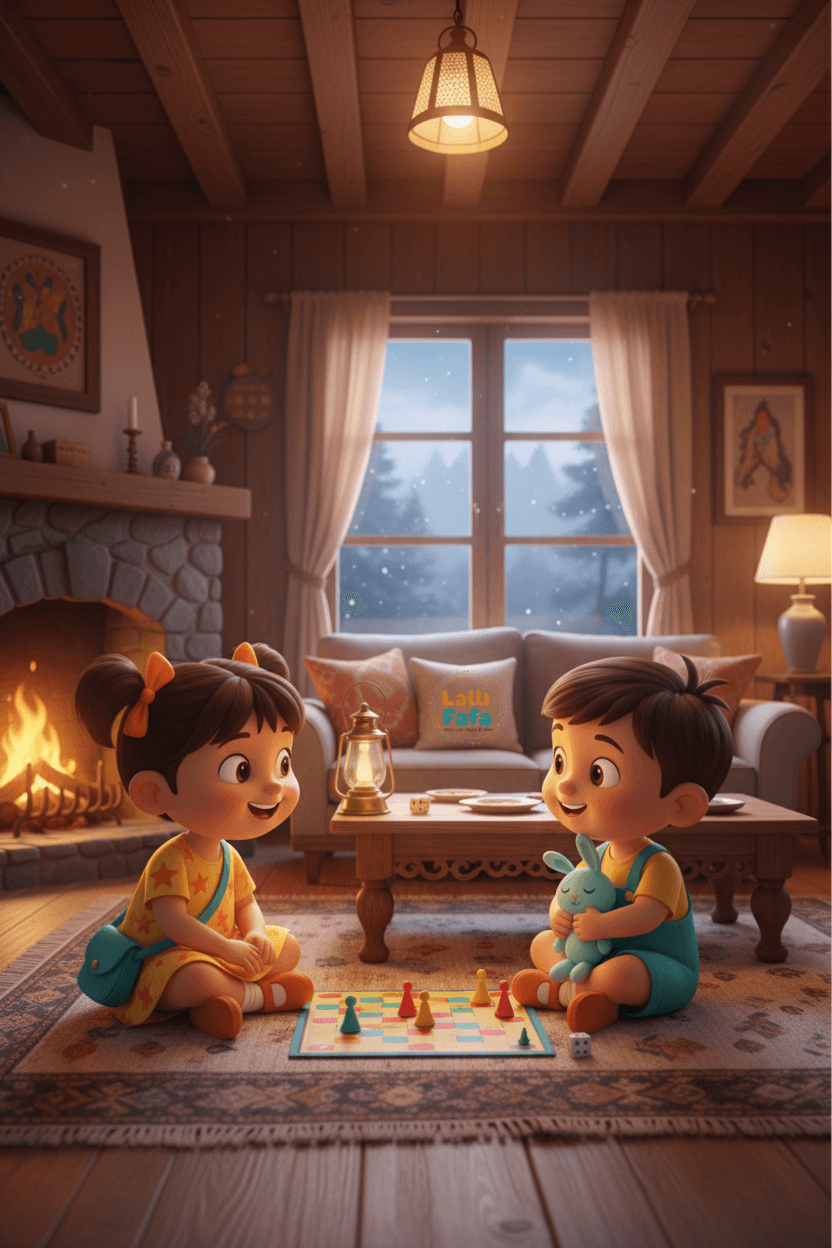
It's the fourth night in a row with the same story, and you know every word by heart. Before you quietly swap it out — here's what's actually happening in their brain.
Night fourteen. Same story. You could recite it backwards. Your child has the words memorised too — you know this because last Tuesday, when you tried to skip a page, they caught you immediately.
Most parents find this charming for about a week and faintly maddening thereafter. But before you quietly rotate in a new book, it's worth understanding what's actually happening — because repetitive story requests are one of the clearest signals your child's brain is doing something important.
Repetition is how children learn
Adults learn by novelty. We're drawn to new information, new experiences, new perspectives. Children's brains work differently. Before around age 7, the primary learning mechanism isn't novelty-seeking — it's repetition and pattern recognition.
When a child hears the same story multiple times, each repetition isn't wasted. It's scaffolding. The first time, they're tracking the plot. The second time, they notice character motivations. The third time, they start anticipating what comes next — which is itself a cognitively sophisticated act. By the tenth time, they've internalised the narrative structure and are using it as a template to understand other stories.
This is why children who are read to a lot learn to read themselves more easily: they've already absorbed the grammar of narrative before they encounter it in print.
It's also emotional regulation
There's a second, equally important reason children return to familiar stories: emotional safety.
In a world that is often unpredictable and overwhelming for a small person — where adults make decisions without explanation, where social situations at nursery are genuinely complex, where big feelings arrive without warning — a story with a known ending is profoundly soothing.
The child already knows the scary part isn't that scary, because they know how it resolves. They can experience the tension of the narrative without the anxiety of genuine uncertainty. This is a kind of emotional inoculation: practicing the experience of a challenge with the safety net of a known happy ending.
Therapists and psychologists who work with children often use this principle deliberately. Repetitive story engagement is considered a healthy sign of emotional processing, not a developmental concern.
The mastery drive
There's a third mechanism, and it's the most delightful. Children have a powerful intrinsic drive toward mastery — toward the moment when something that was once hard becomes effortless.
When your child corrects you for skipping a page, they're not being difficult. They're demonstrating mastery. They know the story. They are the authority on this text. In a world where adults know almost everything and children know almost nothing, this is a profound experience of competence.
The story they've heard thirty times isn't the same story it was the first time. It's a domain in which they are expert. And they need you — the adult, the reader, the authority — to witness that expertise.
When to gently introduce something new
The research suggests that pushing new books on children who aren't ready is counterproductive. However, there are gentle ways to expand their repertoire without abandoning the beloved book:
- Add, don't replace. Keep the familiar story as part of the routine but add a new, shorter story before or after it. The familiar story anchors the session; the new one is an addition, not a substitution.
- Use their interests as a bridge. If the beloved story is about a dog, introduce a new story that also has a dog. The character or setting acts as a familiar foothold.
- Let them choose. Offer two or three options. Children who have agency over their story choice engage more deeply with new material.
- Personalised stories. A story where the child is the main character tends to break the repetition pattern naturally, because the story is already about them — the most interesting subject possible.
A final thought
The next time your child asks for the story you've read seventeen times, try to notice what they're doing rather than what you're enduring. Watch their face during the tense part — they know what's coming and they're choosing to feel the tension anyway. Watch them mouth the words a beat before you say them. Watch the satisfaction on their face when the ending arrives exactly as it should.
That is a child in relationship with a story. That is a child learning what stories are for.
There will be a last time they ask for that book. You won't know it's the last time when it happens. Let yourself enjoy it while it lasts.
Common questions
Why does my child keep asking for the same story every night?
Because their brain is doing important work with it. Each repetition of a familiar story adds a new layer: the first time, a child tracks the plot; the second time, they notice character motivations; by the tenth time, they have internalised the narrative structure and are using it as a template to understand other stories. Repetition is also emotional regulation — a story with a known ending lets a child experience narrative tension without the anxiety of genuine uncertainty.
Is it normal for children to want the same book every night?
Completely normal — and a sign that their brain is developing healthily. Before around age 7, children's primary learning mechanism is repetition and pattern recognition, not novelty-seeking. Therapists and developmental psychologists view repetitive story engagement as a healthy sign of emotional processing and cognitive scaffolding, not a developmental concern. The moment your child starts correcting you when you skip a page is a sign they have mastered the story — a significant developmental achievement.
How do I gently introduce new stories when my child only wants one?
Add rather than replace. Keep the beloved story in the routine as an anchor and introduce new, shorter stories alongside it — before or after, not instead. Use their interests as a bridge: if the favourite story features a dog, introduce a new story that also has a dog. Letting children choose from two or three options also helps — children with agency over story choice engage more deeply with new material than children whose books are chosen for them.
Raj Kothari
Founder, Lalli Fafa — building magical, personalised stories for children across India.
Put this into practice tonight
Create a personalised story for your child — free, in under 2 minutes.