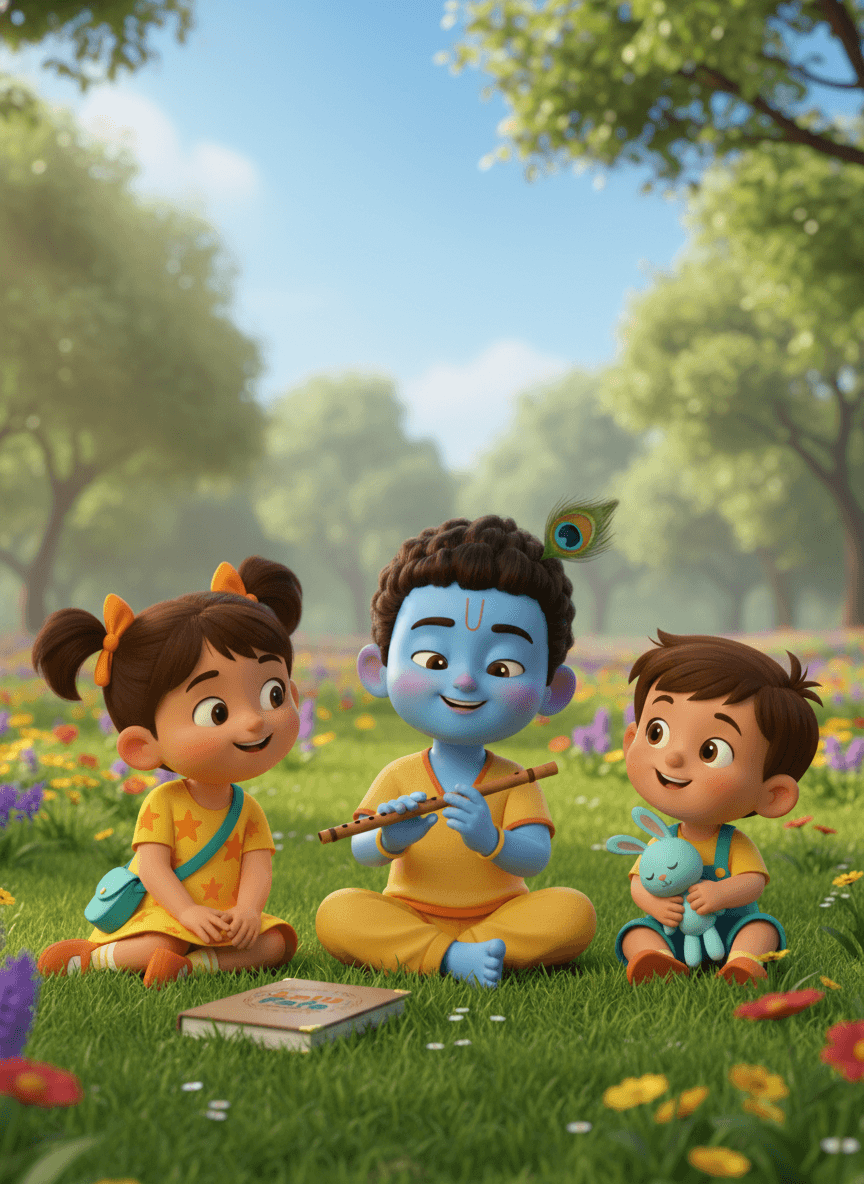
For children growing up between two languages, the language of their stories shapes the language of their inner life. Hindi bedtime stories do something English ones simply can't.
Ask most Indian parents in their 30s what language they dream in. Nine times out of ten, the answer is Hindi — or their mother tongue — even if they've lived abroad for a decade, even if they conduct their entire professional life in English.
Language isn't just a communication tool. It's the medium in which emotion is stored, memory is encoded, and identity is anchored. And for children growing up bilingual, which language their stories come in matters enormously.
The language of the heart
Linguists distinguish between a person's L1 (first language, typically the language of home and infancy) and their L2 (second language, typically acquired in school or formal settings). Emotional responses are processed differently depending on which language you use — L1 triggers deeper limbic system activation, meaning feelings hit harder and stick longer.
When a child hears a story in Hindi — the language spoken by their grandparents, the language of "Nani ki kahani" — it lands in a different part of their experience than an English story does. Both have value. But they are doing different things.
What gets lost when we default to English
Many bilingual Indian families, whether in India's metros or abroad, find themselves defaulting to English for stories. The books are better illustrated, the apps are smoother, the content library is larger. It's the path of least resistance.
But something quietly slips away. Children who receive all their narrative content in English — even when they speak Hindi at home — sometimes struggle to access Hindi as an expressive language. They can follow conversation but can't tell a story. They understand but can't create. The language of the heart becomes the language they can receive but not speak.
For children growing up in India itself, this has a different but related dimension: English becomes associated with ambition and competence, while Hindi — the language of home, family, folk tales — subtly gets coded as informal, less important. This is a loss with long cultural consequences.
What Hindi stories give children
A Hindi story isn't just the same content in a different language. It carries its own vocabulary for emotions, its own cadences of kindness, its own idioms that have no English equivalent:
- Mann ki baat — the things of the heart, unsaid but felt
- Himmat — courage with a distinctly warm, earned quality
- Izzat — respect that encompasses dignity, family honour, and social care
- Jugaad — the particularly Indian art of creative problem-solving under constraints
When a child hears that they showed "sacchi himmat" in their story, they're receiving a concept of courage that is rooted in their cultural context — not borrowed from a Western narrative tradition.
The practical case for bilingual stories
Research on bilingual language development is unambiguous: the more robust a child's L1, the better their L2 acquisition. Children with strong Hindi don't learn English more slowly — they learn it more deeply, with a richer conceptual base to map new vocabulary onto.
This means that investing in Hindi stories during the ages of 2–8 isn't a trade-off against English development. It's the foundation that makes English richer too.
Making it practical
The main barrier has always been content. Hindi books for children are harder to find in the right age-range. Hindi audiobooks are scarcer. Hindi digital content is still catching up.
This is exactly why we built Hindi narration into Lalli Fafa from day one, not as an afterthought. A story about your child, told in clear, warm, native-quality Hindi — about the adventures they go on with Lalli and Fafa — is the kind of content that used to require a grandparent in the room.
That grandparent is irreplaceable. But when they're not there, a story in the right language is the next best thing.
Common questions
Why are Hindi stories important for bilingual children?
Language is not just a communication tool — it is the medium in which emotion is stored and identity is anchored. Hindi, or any first-language mother tongue, triggers deeper emotional processing than a second language. When a child hears a story in Hindi, particularly in the cadences of home and family, it lands in a different part of their experience than an English story does. Both have value, but they are doing different things.
Does reading to children in Hindi help their English development?
Yes — research on bilingual language development is clear that a strong first language supports, not hinders, second language acquisition. Children with robust Hindi build a richer conceptual base that English vocabulary maps onto more deeply. Investing in Hindi stories during ages 2 to 8 is not a trade-off against English development; it is the foundation that makes English richer too.
What do children miss when all their stories are in English?
Children who receive all their narrative content in English — even when they speak Hindi at home — sometimes struggle to access Hindi as an expressive language. They can follow conversation but cannot tell a story in it. Hindi also carries concepts that have no English equivalent: himmat for earned, warm courage; jugaad for creative problem-solving under constraints; mann ki baat for the unspoken feelings of the heart. These concepts arrive through Hindi stories in a way translation cannot replicate.
Raj Kothari
Founder, Lalli Fafa — building magical, personalised stories for children across India.
Put this into practice tonight
Create a personalised story for your child — free, in under 2 minutes.