Most bedtime routines fail because they treat sleep as a destination rather than a journey. Here's a simple framework that works — with stories at the centre.
It's 9:15 PM. You've asked three times. You've negotiated. You've threatened (gently). You've promised. And your child is somehow more awake than they were at 7 PM, when you thought — optimistically — that bedtime would begin.
Sound familiar? You're not doing it wrong. You're just working against a few biological and psychological forces that, once understood, make everything easier.
Why most bedtime routines fail
The most common mistake is treating bedtime as a single event: "It's time to sleep." But for a child's brain, sleep isn't a switch. It's a gradual state that the nervous system needs to be guided into over 20–40 minutes.
Screens make this worse. The blue light and the stimulating content signal the brain to stay alert — and a child who's been watching a tablet at 8:30 PM is physiologically not ready to sleep at 8:45 PM, regardless of how tired they are.
The second mistake is inconsistency. Children's brains are pattern-seeking machines. A routine that varies nightly — sometimes bath, sometimes no bath, sometimes 9 PM, sometimes 10 PM — fails to create the neurological cues that signal "sleep is coming now."
The 4-step framework (30 minutes total)
Here's what the sleep science actually recommends, stripped of all the complicated jargon:
Step 1: Wind-down signal (5 min)
Something that happens at the same time every night and signals "active time is ending." This could be dimming the lights in the main room, a specific song, or simply saying "okay, it's wind-down time." The content matters less than the consistency.
Step 2: Body care (10 min)
Teeth, face, toilet, pyjamas. Keep this in a fixed order. The repetitive physical routine helps shift the nervous system out of high-alert mode. Some children find a warm bath here helpful; others find it overstimulating — you know your child.
Step 3: The story (10–15 min)
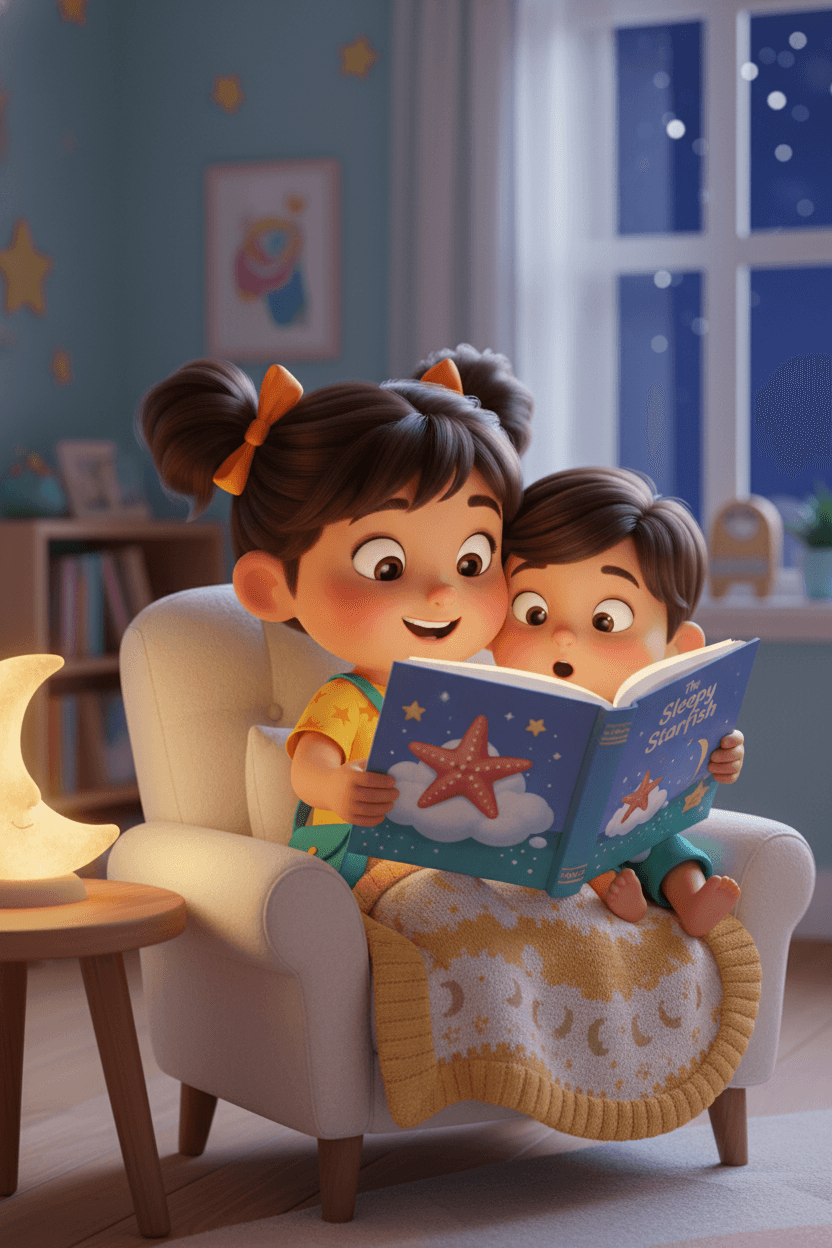
This is the most powerful part of any bedtime routine, and it's where most parents underinvest. A story serves three functions simultaneously: it gives the child a reason to get into bed willingly, it provides a gentle emotional download for the day, and it transitions the brain into the narrative, imaginative mode that is closest to the dreaming state.
The best bedtime stories are:
- Calm in pace but emotionally rich
- Resolved — no cliffhangers that keep the mind active
- Familiar enough to be comforting but novel enough to be engaging
- Ideally, featuring the child as a character (personalised stories show higher sleep-association rates in children who hear them regularly)
Step 4: The transition (5 min)
Lights off, one song or two minutes of quiet conversation about tomorrow, then out. The key here is not re-engaging. Don't start a new topic. Don't look at your phone (the light wakes both of you up). This transition needs to be unhurried but clear.
Age-specific notes
Ages 2–3: Routine rigidity matters most here. Toddlers can become severely dysregulated by even small variations. Use the same story more than once — repetition is not boring to a toddler, it's reassuring.
Ages 4–5: This is when children start wanting input. "Can we do the story about me and the elephant?" is a wonderful sign of healthy autonomy. Let them choose the theme.
Ages 6–8: Children at this age often resist bedtime because they feel they're missing out. The story becomes even more important as a "reward" worth going to bed for. Slightly longer, more complex narratives work well — stories with a lesson or a mini-mystery that gets resolved within the story.
The real goal
The goal of a bedtime routine isn't just sleep tonight. It's the association your child builds between bedtime and safety, warmth, stories, and closeness. Children who have consistent, story-rich bedtime routines in early childhood show measurably lower anxiety levels in primary school — not because of the sleep itself, but because of what that daily ritual communicated about their world.
Start tonight. Even an imperfect routine, done consistently, is vastly better than a perfect routine done sporadically.
Common questions
What is the best bedtime routine for children aged 2 to 8?
Sleep science points to four consistent elements: a wind-down signal that is the same cue every night that active time is ending, body care in a fixed order, a calm story of 10 to 15 minutes, and a short transition to lights-out. The total should be 25 to 35 minutes. What matters more than length is consistency — the same sequence, at roughly the same time, most nights. That predictability is what trains a child's nervous system to expect sleep.
Why do children resist going to bed?
Primarily because sleep is not a switch — it is a gradual state the nervous system needs to be guided into over 20 to 40 minutes. Children who are exposed to stimulating screens close to bedtime are physiologically not ready to sleep when they are asked to, regardless of how tired they are. Inconsistency makes this worse: a routine that varies nightly fails to build the neurological cues that signal sleep is coming now.
How important is a bedtime story in a child's routine?
Very. A bedtime story serves three functions simultaneously: it gives the child a reason to get into bed willingly, provides a gentle emotional download for the day, and transitions the brain into the narrative imaginative mode that is closest to the dreaming state. Children who have consistent, story-rich bedtime routines in early childhood show measurably lower anxiety levels in primary school — not because of the sleep itself, but because of what the daily ritual communicated about their world.

Raj Kothari
Founder, Lalli Fafa — building magical, personalised stories for children across India.

Put this into practice tonight
Create a personalised story for your child — free, in under 2 minutes.