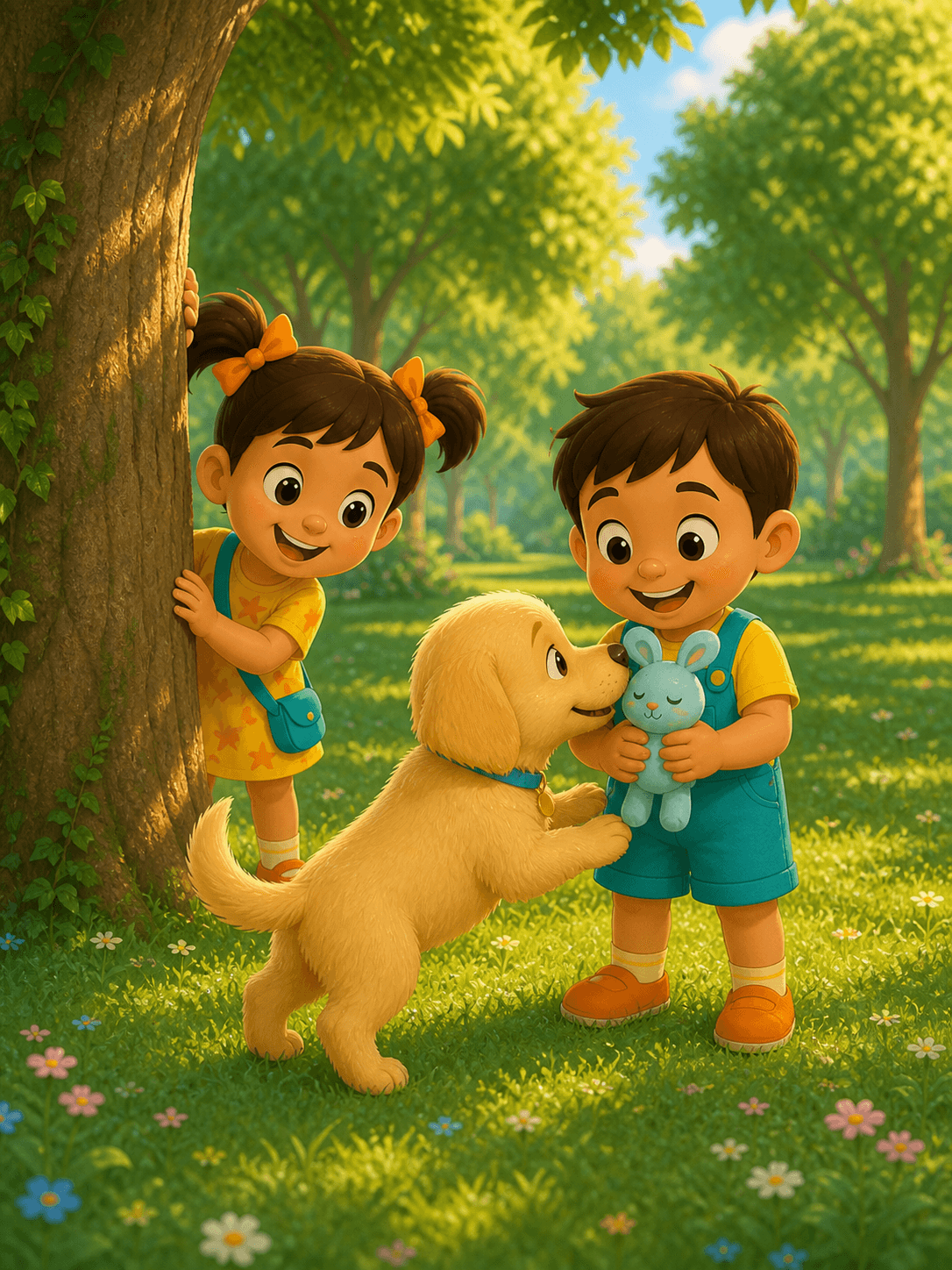
Telling a child to 'be kind' rarely changes behaviour. But a story where a character chooses kindness — and feels the difference it makes — can rewire how a child responds to the world.
"Be kind." It's the instruction we give most and the one that changes behaviour least. Children hear it dozens of times a week — from parents, teachers, older siblings — and it seems to slide straight off.
This isn't because children are unkind by nature. It's because "be kind" is an abstract instruction delivered in a moment of conflict, when the brain is least receptive to abstract reasoning. You're essentially asking a child's prefrontal cortex — which isn't fully developed until their mid-twenties — to override an immediate emotional impulse using a concept they've been told but haven't felt.
Stories work on a completely different mechanism. And the research on why is genuinely fascinating — with direct implications for what we choose to tell our children at bedtime.
Narrative transportation and moral development
Psychologists use the term "narrative transportation" to describe what happens when a reader or listener becomes absorbed in a story. Heart rate changes. Time distorts. The brain begins processing the fictional events as if they were real experiences.
For children, who have more permeable boundaries between imagination and reality than adults, this effect is especially pronounced. When a child is transported into a story, they don't just observe a character being kind — they inhabit the experience of kindness. They feel, vicariously, what it is to share something precious with a stranger, to stand up for someone who can't stand up for themselves, to choose honesty when a lie would be easier.
This vicarious experience creates something that direct instruction cannot: an emotional memory. And emotional memories shape behaviour far more powerfully than rules do. A 2014 review published in Psychological Bulletin found that narrative-based persuasion — communicating values through stories rather than arguments — produces more lasting behavioural change than direct instruction across virtually every age group studied, including children aged 3 and up.
What the neuroscience adds
The mechanism isn't just psychological — it's neural. When we process a story, the brain activates mirror neurons: the same neural pathways that fire when we ourselves perform an action or experience an emotion. Listening to a character feel the warmth of a kind act activates the same circuitry as experiencing that warmth directly.
For children aged 3–8, whose empathy circuits are still actively developing, this is particularly significant. Regular exposure to stories that model kindness — especially told in the warm, close context of bedtime — effectively trains the empathy system. The brain is being exercised in kindness, repetition by repetition, in a way that "be kind" simply cannot achieve.
India's storytelling tradition understood this first
The Panchatantra — written over two thousand years ago and eventually translated into more than fifty languages — understood this principle long before modern psychology named it. Its animal fables never announce the moral at the start. The moral emerges from what happens to the characters, and the child's mind makes the connection themselves. That self-discovery is far stickier than being told.
The Jataka Tales do something even more sophisticated: they consistently show the protagonist choosing compassion in situations where self-interest would have been easier — not because they are told to, but because they are that kind of being. The identity precedes the act. This is precisely the mechanism that makes personalised stories so powerful: when a child hears themselves as someone who is kind, they begin to act accordingly.
Both traditions understood, intuitively, what researchers now confirm: values taught through story arrive as feeling first and knowledge second. That order is the only one that produces lasting change.
Why the character's choice matters most
The most effective prosocial stories for children aren't ones where the kind character is a saint. They're ones where the character is tempted not to be kind — where kindness costs something — and chooses it anyway.
The moment of choice is everything. A child who hears a character decide to share their last biscuit even though they were hungry doesn't just learn "sharing is good." They experience the internal struggle, the decision, and the warm resolution that follows. That complete emotional arc is what sticks.
This is why the lesson in a Lalli Fafa story is never stated at the beginning or hammered home at the end. It lives in the middle — in the moment of choice — and the ending simply lets the child feel what that choice led to. The lesson the child draws themselves is the only lesson they truly own.
Personalised kindness stories hit harder
When the protagonist of the story shares the child's name, age, and personal characteristics, the narrative transportation effect is amplified. The child isn't just empathising with a character — they are the character. The moral stakes feel higher. The choice feels like their choice.
A 2023 study from the University of Toronto found that 4-year-olds who heard stories featuring a character sharing their name being generous subsequently chose to share significantly more with strangers in the hours following the story — the identity activation shifted real-world behaviour immediately. Children who hear personalised kindness stories start applying the lesson not as a rule ("I should share") but as an identity ("I'm the kind of person who shares"). The shift from rule-following to identity-based behaviour is one of the most significant transitions in moral development — and stories accelerate it in a way that instruction simply cannot.
Ages and appropriate kindness lessons
Ages 2–3: Kindness stories work best with simple, observable acts — sharing a toy, being gentle with an animal, giving a hug when someone is sad. Abstract kindness (defending someone's feelings) is too conceptually complex at this age. Make it physical and immediate. The character should face a situation close to the toddler's actual daily life.
Ages 4–6: This is when empathy begins developing robustly. Stories about characters noticing that a friend feels left out — and doing something about it — are enormously effective. The child is developmentally ready to understand that other people have inner lives different from their own. Stories about small acts of courage — speaking up for someone who is being teased — land particularly well at this age.
Ages 7–8: Moral complexity becomes possible. Stories where kindness requires courage, or where the kind choice is unpopular, resonate deeply. These children are beginning to navigate peer pressure and appreciate stories that model integrity over approval. The character who quietly helps someone instead of laughing with the crowd is a powerful archetype for this age group.
A simple kindness story structure any parent can use
You don't need a published book or an app to tell an effective kindness story. A five-part structure works remarkably well:
- The setting: Your child, by name, in a familiar place — school, the park, a friend's house.
- The situation: They notice something is wrong. Someone is left out. Something needs carrying. Someone is upset.
- The temptation: It would be easy not to help. They're tired. No one is watching. Their friend is already running ahead.
- The choice: They help anyway. Describe the inner moment — the slight hesitation, then the decision.
- The feeling: Not "everyone praised them" — but the quieter, warmer feeling of having done the right thing when no one was watching.
Step 3 is the most important. Don't skip the temptation. It's what makes the story a story rather than a lecture, and it's what makes the lesson belong to the child rather than to you.
What to say after the story
The most underrated parenting move: after a kindness story, don't lecture. Ask one question. "What do you think Priya was feeling when she decided to share?" or "Would it have been hard to make that choice?" Let the child process out loud. Research suggests that even a two-minute post-story discussion deepens the emotional integration of the lesson significantly — the child arrives at the insight themselves, which makes it theirs in a way external instruction never can be.
The story did the heavy lifting. Your job is to hold the space for your child to discover what it means — for themselves, in their own words. The insight they arrive at is worth ten times the insight you provide.
Common questions
Why does telling a child to be kind not change their behaviour?
Because it is an abstract instruction delivered in a moment of conflict, when the brain is least receptive to abstract reasoning. It asks a child's underdeveloped prefrontal cortex to override an immediate emotional impulse using a concept they have been told but have not felt. Stories bypass this entirely: they create vicarious emotional experiences of kindness that become emotional memories, and emotional memories shape behaviour far more powerfully than rules do.
How do stories teach children to be kind?
Through narrative transportation — the psychological phenomenon where a listener becomes so absorbed in a story that their brain begins processing fictional events as real experiences. For children, who have more permeable boundaries between imagination and reality than adults, this is especially powerful. When a child inhabits a story where a character chooses kindness at real personal cost, they do not just observe the choice — they experience it. A 2014 review in Psychological Bulletin confirmed that narrative-based values communication produces more lasting behavioural change than direct instruction across all age groups studied.
What kind of kindness stories work best for young children?
Stories where kindness costs something. The character should be genuinely tempted not to be kind — hungry but sharing their last biscuit, tired but helping a friend anyway. The moment of internal struggle before the kind choice is what makes the lesson stick: the child experiences the difficulty and the warm resolution as a complete emotional arc. Stories where kindness is effortless, or where the character is already saintly, do not create the same emotional imprint.
Why does the Panchatantra work so well for teaching values to children?
The Panchatantra embeds values in vivid narrative situations rather than announcing them as morals. Its fables never state the lesson at the start — the moral emerges from what happens to the characters, and the child's mind makes the connection themselves. That self-discovery is far stickier than being told. The Jataka Tales work similarly, consistently showing protagonists choosing compassion in situations where self-interest would have been easier — so the child experiences the value as identity rather than instruction.
Do personalised kindness stories work better than generic ones?
Yes — significantly so. A 2023 University of Toronto study found that 4-year-olds who heard a story featuring a character sharing their name being generous chose to share considerably more with strangers in the hours immediately following, compared to children who heard the same story with a different character name. The identity activation from hearing their own name in the kind role shifted real-world behaviour. Children who regularly hear personalised kindness stories shift from rule-following — I should share — to identity-based behaviour: I am the kind of person who shares.
From what age can children understand kindness stories?
From age 2, with appropriate story design. Toddlers aged 2 to 3 respond best to kindness shown through simple, physical, observable acts — sharing a toy, being gentle with an animal. Abstract kindness such as defending someone's feelings requires theory of mind that develops from age 4 onwards. By ages 4 to 6, children can understand that other people have inner lives different from their own and respond powerfully to stories about noticing and responding to others' distress. Moral complexity — kindness that requires courage or social risk — becomes accessible from around age 7.
Raj Kothari
Founder, Lalli Fafa — building magical, personalised stories for children across India.
Put this into practice tonight
Create a personalised story for your child — free, in under 2 minutes.