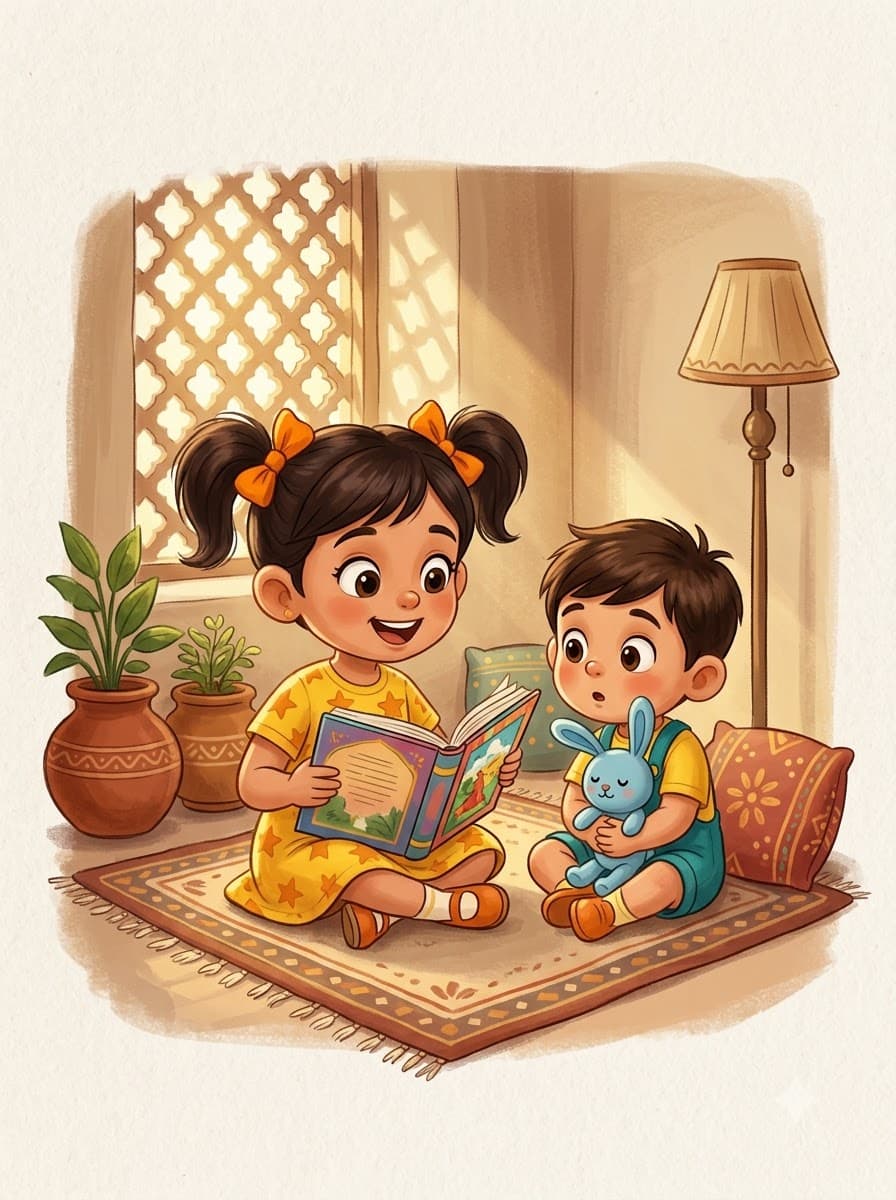
Reading aloud isn't one skill, it's a different skill at every age. Here's exactly how to do it well at each stage, from squirmy toddlers to kids who want to know what happens next before you've finished the sentence.
The single most effective technique for reading aloud at any age is dialogic reading: pausing to ask questions, letting your child predict what happens next, and following their interest instead of rushing to the last page. What that looks like changes a lot by age. A wriggly one-year-old needs rhythm and repetition, not questions, while a six-year-old can carry a real conversation about a character's choices. Here's what actually works at each stage.
If you're wondering when to start reading to your child at all, the short answer is birth, and we cover that timeline in full in at what age should children start listening to stories. This guide picks up from there: not when to start, but how to read aloud well once you have, at every age from infancy through early school years.
Birth to 12 months: it's about rhythm, not comprehension
At this age, your baby isn't following plot or vocabulary. They're responding to the rhythm of your voice, the rise and fall of sentences, and the comfort of being held while you read. That means the technique here is almost entirely about delivery, not content.
- Read slowly and with more warmth than you would to an adult. The exaggeration helps.
- Don't worry about finishing the book or reading every word. Point at pictures, name objects, let your baby touch the pages.
- Repeat the same few books often. Familiarity is doing real work here, even if it looks like nothing is happening.
1 to 3 years: this is where dialogic reading starts to matter
Somewhere around 15 to 18 months, most toddlers start actively participating rather than just listening: pointing at pictures, saying single words, pulling the book back to a page they liked. This is exactly the moment to lean into what researchers call dialogic reading: instead of just reading the words on the page, you pause and ask, "what's that?", "where's the dog?", or "what do you think happens now?"
A few things that make this work well at this age:
- Ask, don't just tell. Instead of narrating "this is a dog," ask "what's this?" and let them answer, even if the answer is wrong or just a sound. The act of retrieving the word matters more than getting it right.
- Let them choose the same book again. Repetition at this age isn't boredom, it's rehearsal. Each repeat builds vocabulary and comprehension a little further.
- Keep sessions short. Five to ten minutes is plenty. The goal is a positive, low-pressure association with books, not a long sitting.
3 to 5 years: predicting, voicing, and letting the story breathe
By age three, most children are starting to understand story structure well enough to predict what happens next, and this is where reading aloud gets genuinely fun for both of you. A few techniques that work particularly well:
- Pause before the reveal. "And when she opened the door, she saw..." then stop and let your child guess. This turns passive listening into active prediction, which is a stronger comprehension exercise than reading straight through.
- Use distinct character voices. It sounds like a small thing, but distinct voices help children track who is speaking and, over time, build an intuitive sense of character and perspective.
- Let them interrupt. Questions mid-story ("why is he sad?") are not a distraction from the reading, they are the reading. Answer briefly and keep going.
- Slow down for bedtime specifically. If the story is happening at night, a slower, quieter pace helps wind a child down rather than energising them right before sleep.
5 to 8 years: longer stories, real discussion, growing independence
School-age children can hold a longer narrative in mind, track multiple characters, and start to engage with a story's underlying idea, not just its events. Reading aloud at this age can shift toward:
- Chapter books read a bit at a time, with a quick recap of "where we left off" at the start of each session. That recap itself is a valuable comprehension exercise.
- Real questions after the story, not "what did you learn," which invites a rehearsed answer, but "what would you have done?" or "why do you think she made that choice?"
- Some independent reading alongside read-aloud time, rather than instead of it. Being read to still has value well past the age a child can read alone. It's a different kind of experience, more about shared attention than decoding text.
Two techniques that work at every age
Follow their interest over your plan. If your child wants to linger on a page, ask a tangential question, or hear the same three pages again, that's not a detour from the reading, it usually is the most valuable part of it.
Ask one open question after, not five. A single "what part did you like best?" or "how do you think she felt?" does more than a barrage of comprehension questions. It signals genuine curiosity rather than a quiz, and children respond very differently to the two.
When you can't read aloud yourself
Some nights, you're exhausted, travelling, or simply don't have the voice left for a full read-aloud session. This is where narrated audio stories genuinely help, not as a replacement for your voice, but as a way to keep the ritual going on the nights your voice isn't available. A story narrated well still gives your child rhythm, vocabulary, character voices, and a narrative to follow, even without you reading it live.
It's part of why we built Lalli Fafa around real narration rather than flat text-to-speech, and why every story is personalized around your child specifically, so even on the nights you're not the one reading, the story is still unmistakably theirs.
Common questions
What is dialogic reading and why does it matter?
Dialogic reading is a technique where, instead of just reading the words on a page, you pause to ask questions, let your child predict what happens next, and follow their interest rather than rushing to finish. It turns reading aloud from a passive listening exercise into an active conversation, which builds vocabulary and comprehension more effectively than straight-through reading.
How long should I read aloud to my toddler?
Five to ten minutes is plenty for children under three. The goal at this age is a short, positive, low-pressure association with books and stories, not a long sitting. Sessions can lengthen naturally as your child's attention span grows.
Should I let my child interrupt while I'm reading?
Yes. Questions and comments mid-story are not a distraction from reading, they are a sign your child is actively processing the story. Answer briefly and continue. This kind of interruption is part of how comprehension develops, not something to discourage.
Is it worth using different voices for different characters?
Yes, it helps more than it might seem. Distinct character voices help children track who is speaking and, over repeated stories, build an intuitive sense of perspective and character, which supports both listening comprehension and emotional understanding.
What should I ask my child after reading a story?
One open question tends to work better than several specific ones. Something like 'what part did you like best?' or 'how do you think she felt?' invites your child to process the story in their own words, rather than answering a quiz. Avoid 'what did you learn,' which tends to produce a rehearsed rather than genuine answer.
Is an audio or narrated story as good as reading aloud myself?
A parent's own voice carries a comfort that's hard to replace, but a well-narrated story still provides rhythm, vocabulary, distinct character voices, and a narrative structure for your child to follow. Audio stories work well as a way to keep the story-time ritual going on nights when reading aloud yourself isn't possible, not as a full-time replacement.
Raj Kothari
Founder, Lalli Fafa — building magical, personalised stories for children across India.
Put this into practice tonight
Create a personalised story for your child — free, in under 2 minutes.