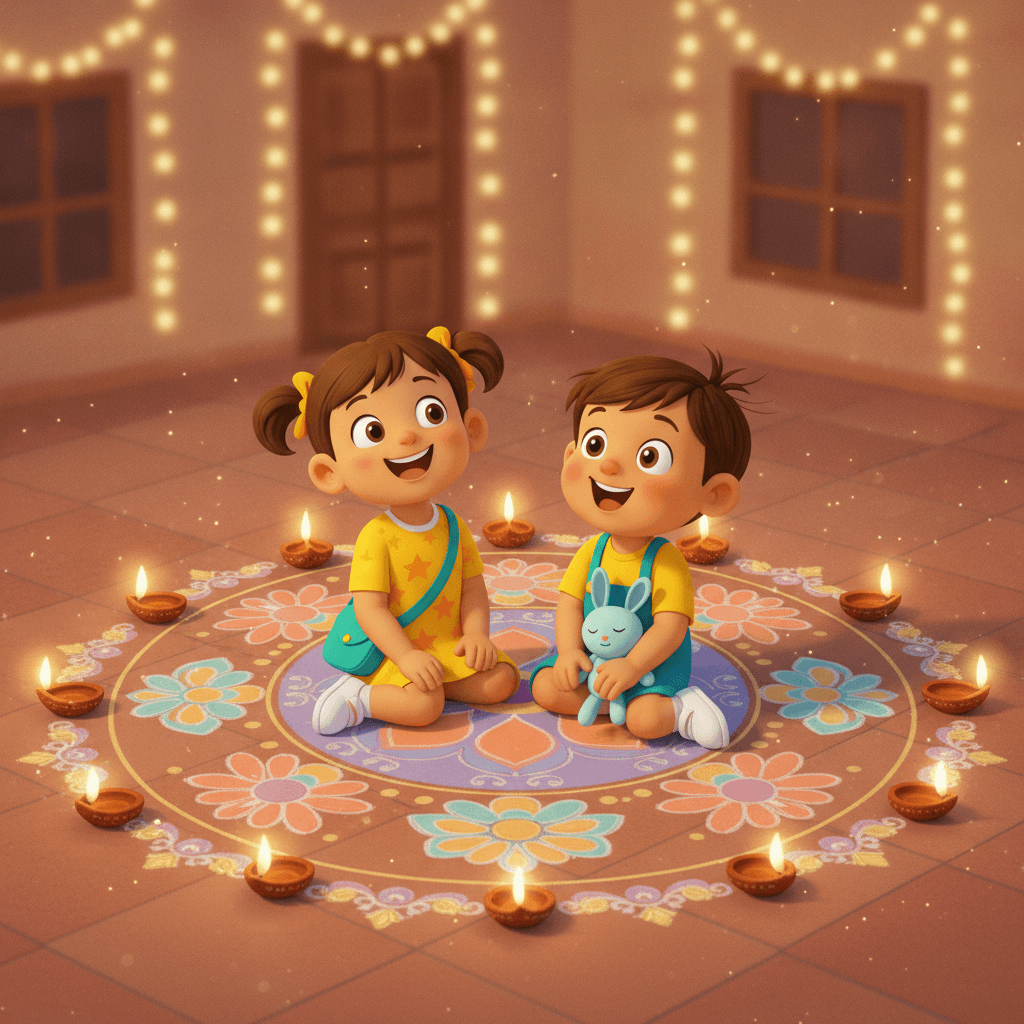
Holi is one of the richest festivals for storytelling — joyful, communal, and full of the kind of meaning that children absorb through play. Here's how to tell it well.
Holi is unusual among festivals because its central act — throwing colour — is something children can fully participate in from the very first year they understand what's happening. That physicality makes Holi one of the easiest festivals to bring to life in a story, because the child already has a body memory of what it feels like.
What Holi carries for children
Before thinking about how to tell a Holi story, it's worth thinking about what Holi actually contains — beyond the obvious delight of colour and water.
Holi traditionally marks the end of winter and the arrival of spring: renewal, the world waking up, things beginning again. For children, this maps easily onto ideas they already understand: starting fresh, a new beginning, leaving behind something difficult.
The story of Holika and Prahlad carries something deeper: the protection of the innocent and the failure of cruelty. Prahlad's faith held even when it shouldn't have been enough. That's a story about trust — in love, in goodness — that children can feel even before they can explain it.
And at the human level, Holi is the festival where hierarchies soften. Neighbours who haven't spoken all year throw colour at each other and laugh. That levelling — the idea that today, colour makes everyone equal — carries a meaning that children absorb without needing it explained.
What a Holi story can teach
The most effective Holi stories for children weave these themes through a specific, personal adventure rather than retelling the mythology directly. Some ideas that work well:
- Forgiveness through colour. A child who has been in a fight with a friend. They meet at Holi, someone throws colour, both of them laugh, and the argument suddenly feels smaller than it did. Forgiveness arrives through the festival rather than through a difficult conversation.
- Renewal. A story set at the tail end of a hard season — a difficult time at school, a period when something wasn't working — where Holi marks a literal new beginning. The colours wash the old chapter away.
- Courage to connect. A shy child who hasn't yet made friends in a new neighbourhood. Holi forces proximity — everyone is covered in colour, everyone is laughing — and the barriers that felt impossible suddenly dissolve.
Making it personal
A Holi story becomes extraordinary when your child is the one throwing colour, when it's their friend they forgive, when it's their neighbourhood that dissolves into laughter. The self-reference effect is especially strong at festivals, where the child is already emotionally activated — already anticipating the gulal, already smelling the thandai. A story that places them at the centre of that activation is one they'll carry.
The best time to read a Holi story is the evening before — when the anticipation is real, when the festival is close enough to touch, but the actual colours haven't flown yet. The story becomes a preview of a feeling they're about to have. Create a Holi story for your child in English or Hindi in under two minutes.
Common questions
What values can Holi stories teach children?
Holi carries several ideas that translate beautifully into stories for children: renewal and fresh starts, forgiveness through shared joy, the levelling of barriers between people, and the courage to connect. The most effective Holi stories embed these values in a specific personal adventure — a child forgiving a friend, entering a new community, or marking the end of a hard season — rather than explaining the values directly.
When is the best time to tell children a Holi story?
The evening before Holi is ideal — when anticipation is real and the festival is close enough to feel, but the colours haven't flown yet. The story becomes a kind of preview of the feeling they're about to have, which makes the narrative land more deeply. A story told in this window tends to be the one children remember and ask for again when the festival comes around next year.
How is a Holi story different from a Diwali story?
Both are festival stories that carry Indian values through celebration, but they work with different emotional material. Diwali stories tend to centre on light overcoming darkness, generosity, and togetherness. Holi stories are particularly rich for themes of forgiveness, renewal, and connection — the moment colour dissolves the distance between people is one of the most natural metaphors in children's storytelling for the end of a conflict and the beginning of something new.
Raj Kothari
Founder, Lalli Fafa — building magical, personalised stories for children across India.
Put this into practice tonight
Create a personalised story for your child — free, in under 2 minutes.