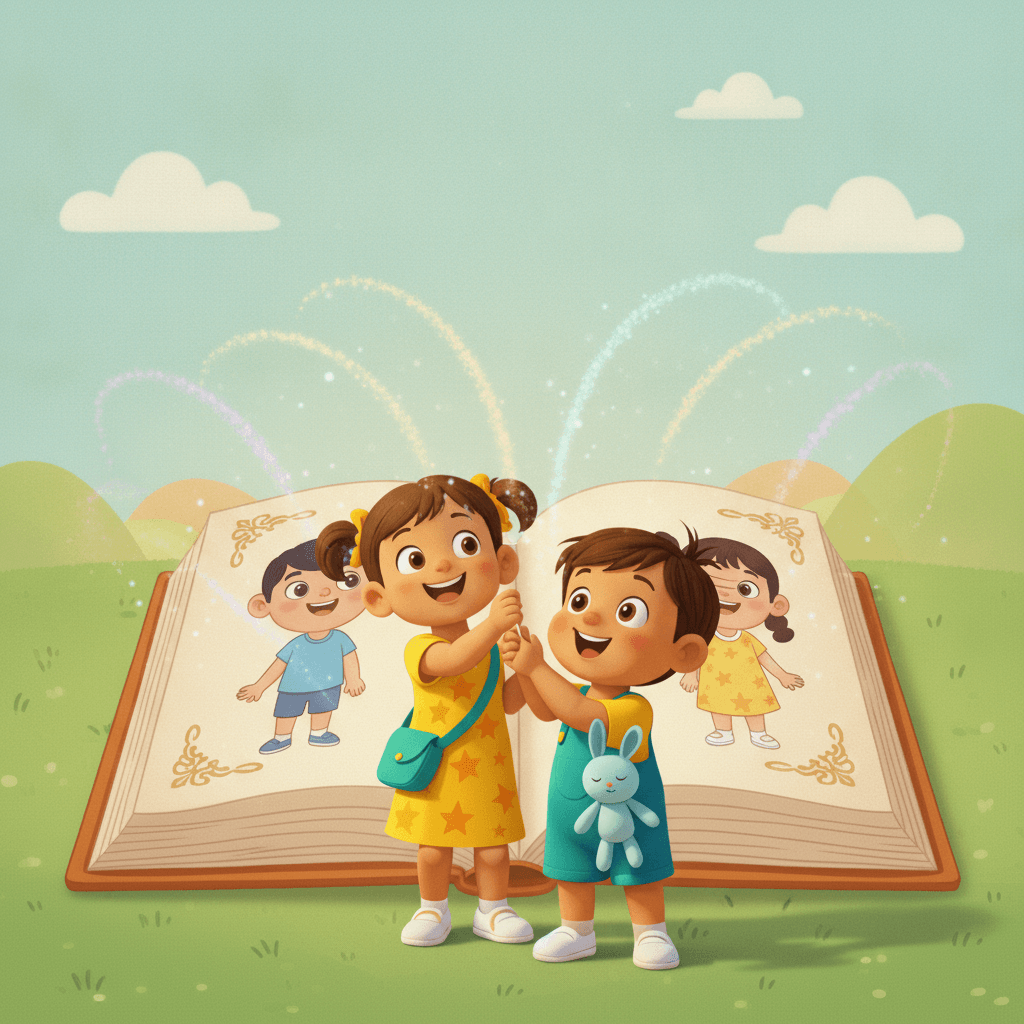
Regular storybooks aren't going anywhere — and they shouldn't. But personalised stories do something specific and measurable that even great storybooks can't. Here's the honest comparison.
Personalised stories and traditional storybooks aren't competing — they do different jobs. Storybooks build shared cultural language, introduce children to characters and worlds beyond themselves, and often have illustration quality and craft that's hard to match. Personalised stories do one specific thing storybooks structurally cannot: they let a child experience themselves as the protagonist, which research links to higher self-efficacy and stronger identification with the story's lessons. The honest answer to "which is better" is: both, for different reasons — but if you only have time for one tonight, the research leans toward personalised for impact on confidence and behaviour.
The psychological mechanism: the self-reference effect
There's a well-documented phenomenon in psychology called the self-reference effect: people remember and engage with information more deeply when it's connected to themselves. Show someone a list of words and ask them to relate half to themselves and half to a stranger — they'll remember "their" words significantly better, days later.
Stories work the same way. When a child hears a story about "a girl," they're an observer. When they hear a story about a girl with their name, their hair, their favourite colour, who is scared of the same things they're scared of — they're not observing anymore. They're inside it. Every choice the character makes is implicitly a choice the child is rehearsing for themselves.
What traditional storybooks do better
This isn't a case against storybooks — quite the opposite. Some things are genuinely better served by stories that aren't about your child:
- Shared cultural reference points. When your child's friends, cousins, and classmates have all read the same book, that shared story becomes a social bridge — inside jokes, games, references. A personalised story, by definition, can't be shared this way.
- Exposure to other lives. Part of growing empathy is encountering characters who are not like you — different backgrounds, different challenges, different ways of seeing the world. A story that's always about "me" risks becoming narrow if it's the only kind of story a child experiences.
- Illustration and literary craft. The best children's books are made by people who've spent years honing a single 32-page story. That density of craft is real, and it's part of why classics remain classics.
What personalised stories do better
The advantages of personalisation are narrower but, where they apply, significant:
- Identity-building. A child who repeatedly hears themselves described as brave, kind, or resourceful starts to build that into their self-concept — not as praise, but as narrative evidence. We explore this in more depth in why personalised stories build confidence.
- Behaviour rehearsal. When the character facing a hard choice (sharing, telling the truth, trying again after failing) shares the child's name, the choice feels like a rehearsal for the child's own life — not someone else's lesson.
- Engagement for reluctant listeners. Children who are otherwise resistant to "story time" often engage immediately when they realise the story is about them. The personalisation itself is a hook.
- Addressing specific, current situations. A storybook can't be written tonight about the specific disagreement your child had with their best friend this afternoon. A personalised story can.
The practical answer
Most families find the best rhythm is a mix: classic storybooks as a steady diet — for craft, shared culture, and the simple pleasure of beautiful illustration — with personalised stories used more deliberately, for moments that call for it. A new sibling arriving. Starting school. A specific fear. A behaviour you're trying to encourage.
Used this way, personalised stories aren't a replacement for the bookshelf. They're a tool that does something the bookshelf can't — meeting your child exactly where they are, as the hero of their own night. Try it free and see how your child reacts to hearing their own name in the story.
Common questions
Are personalised stories better than regular storybooks for children?
They do different jobs. Traditional storybooks build shared cultural references, expose children to lives unlike their own, and often have illustration and craft that is hard to match. Personalised stories do one specific thing storybooks structurally cannot: they let a child experience themselves as the protagonist, which research links to higher self-efficacy and stronger identification with the story's lessons. Most families find the best approach is both.
What is the self-reference effect in children's stories?
The self-reference effect is a well-documented psychological phenomenon: people remember and engage more deeply with information connected to themselves. For children, a story about a character with their name, their interests, and their personality activates a fundamentally different kind of engagement than a story about a generic character. They stop being observers and become active participants — rehearsing choices and feelings as if they were real.
Do personalised children's stories actually help with behaviour and confidence?
Research suggests yes, with a specific mechanism: personalised stories move children from rule-following — I should share — to identity-based behaviour — I am the kind of person who shares. When a child repeatedly hears themselves as brave, kind, or resourceful in a story, those traits start to feel true. Not as empty praise, but as narrative evidence that becomes part of how they see themselves.
Raj Kothari
Founder, Lalli Fafa — building magical, personalised stories for children across India.
Put this into practice tonight
Create a personalised story for your child — free, in under 2 minutes.