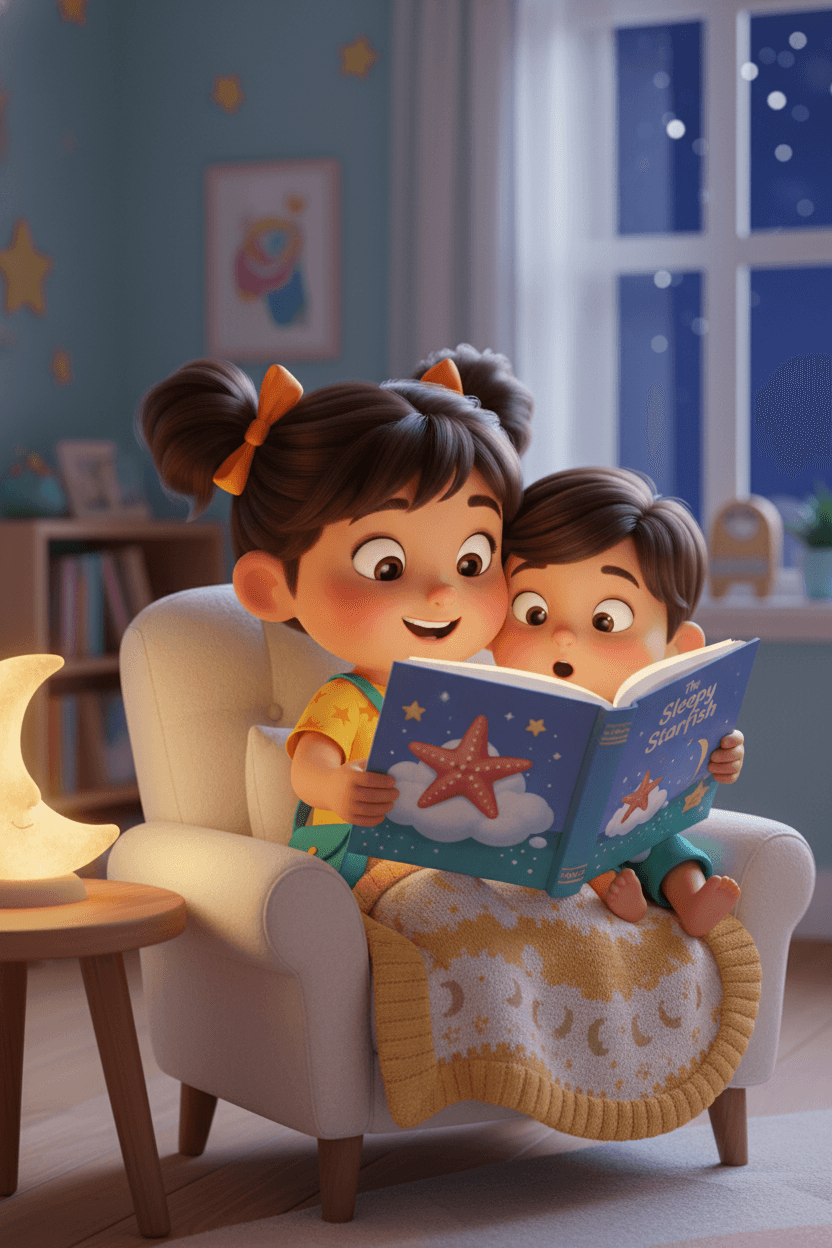
Toddlers engage with stories differently from older children — and personalised stories work differently too. Here's what the research says, and what to look for at this age.
Personalised stories work particularly powerfully for toddlers aged 2 and 3 — but for reasons that are different from older children. At this age, the hearing of their own name in a story isn't just flattering; it's developmentally meaningful. Toddlers are in the earliest stages of building a narrative self — a sense of "I" that persists through time — and stories that place them at the centre actively support that process.
What's happening developmentally at ages 2 and 3
Between ages 2 and 3, children are doing something extraordinary: they're beginning to understand that they are a continuous person across time. The child who went to the park yesterday is the same child sitting here now. This sounds simple; for a toddler, it is a major cognitive achievement.
Narrative — the structure of "first this happened, then that happened, then it ended this way" — is one of the primary tools children use to build this sense of continuous self. Stories are literally how toddlers begin to understand what kind of person they are.
When a story places a toddler as its hero, it does something no other story can: it gives them narrative evidence about themselves. Not just "this is a character called Aarav" but "I am someone who went on an adventure. I am someone who helped. I am someone brave." That evidence accumulates.
What works at this age — and what doesn't
Effective personalised stories for toddlers are different from effective stories for five- or six-year-olds. A few principles that matter most:
Short and complete
Toddlers have working memory that holds about two to three story events at once. A story with twelve scenes and a complex plot is too much. The ideal toddler story has a simple arc: something happens, the child character does one thing about it, and it resolves. The whole thing should feel like it could fit in the space between closing the curtains and turning out the light.
Repetition is welcome, not a problem
If your toddler asks for the same personalised story four nights in a row, that is not boredom — it's mastery. At this age, the primary learning mechanism is repetition and pattern recognition, not novelty. Each repetition lets them anticipate, which is its own cognitive work. Don't feel obliged to introduce new stories constantly.
Familiar settings work better than fantastical ones
A toddler story set in a forest they've never seen requires them to construct a mental image of something unfamiliar, which takes cognitive effort away from the emotional content of the story. Stories set in places they know — a kitchen, a garden, a grandparent's house — let them spend all their attention on what happens and how it feels. Save the magical forests for age 4 and up.
Simple emotions, clearly named
Ages 2–3 are when emotional vocabulary is being built. A story that shows a character feeling happy, then sad, then happy again — and names those feelings simply and directly — is doing real developmental work. This isn't dumbing down. It's meeting the child exactly where their language is growing.
The bilingual advantage at this age
For families where Hindi (or another Indian language) is the language of home, ages 2 and 3 are the single most important window for building that language's foundations. The mother tongue is most deeply absorbed in the first three years — not through explicit teaching, but through exposure, and especially through emotionally rich exposure like stories.
A personalised bedtime story in Hindi at age 2 is not just sweet. It is actively building the linguistic architecture that will support everything else your child learns in that language for the rest of their life.
A practical note
At ages 2 and 3, the most important thing about a bedtime story is not its educational content — it's its emotional quality. Warm, calm, unhurried, and about them. A story your toddler associates with safety and closeness is doing more than any lesson it contains. The lesson is the feeling.
Common questions
Are personalised stories good for toddlers aged 2 and 3?
Yes — and particularly powerfully so. Toddlers aged 2 and 3 are in the earliest stages of building a narrative self, a sense of who they are that persists through time. Stories that place them at the centre give them narrative evidence about themselves — I am someone who helped, I am someone brave — in a way that accumulates into self-concept. This is distinct from the confidence effects seen in older children and is specific to this developmental window.
How long should a bedtime story be for a 2 or 3 year old?
Short and complete. Toddlers have working memory that holds about two to three story events at once. The ideal toddler story has a simple arc — something happens, the child character does one thing about it, and it resolves — that fits comfortably within five to eight minutes. A story with a complex plot requiring them to remember what happened four scenes ago is simply too long for this age.
Should I tell my toddler the same story every night?
If they ask for it, yes — without hesitation. At ages 2 and 3, the primary learning mechanism is repetition and pattern recognition, not novelty. Each time your toddler hears the same story, they are doing new cognitive work: anticipating what comes next, deepening their understanding of the characters, practicing the emotional arc. Repeating a beloved story is developmentally valuable, not lazy parenting.
Raj Kothari
Founder, Lalli Fafa — building magical, personalised stories for children across India.
Put this into practice tonight
Create a personalised story for your child — free, in under 2 minutes.